
1. The Enduring Appeal of Historic Townscapes and High-Net-Worth Migration in the Age of Data Center Expansion
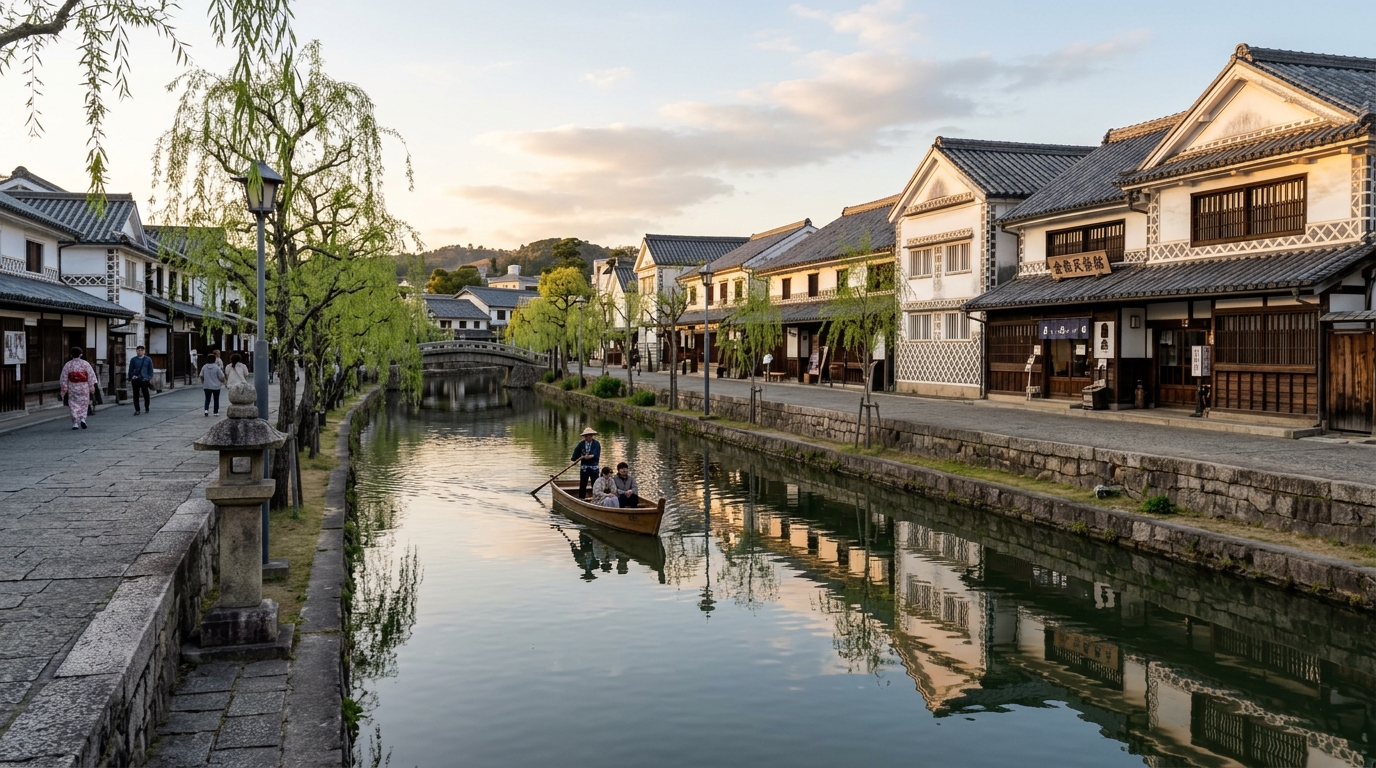
October 22 marks Capital Transfer Day (Heian Sento no Hi, 平安遷都の日), a fitting opportunity to reflect on the beauty of Japan's ancient capitals and rediscover the value of preserving historical streetscapes for future generations. Today, as standardized urban planning focused solely on convenience and efficiency is being reexamined, the revitalization of traditional kominka (Japanese folk houses) and machiya (traditional townhouses)—renovating them for modern living while preserving their heritage—is drawing significant attention as an inspiring way to live.
Recently, Okayama Prefecture and neighboring Tamano City have seen a rapid concentration of next-generation digital and energy infrastructure, such as PowerX's manufacturing bases for large-scale energy storage systems and containerized data centers. This advanced infrastructure, combined with the normalization of remote work, has removed location constraints and fueled a shift from major metro areas to regional cities.
In particular, high-net-worth individuals—such as IT executives and creative professionals—seeking migration or dual-location living are drawn not just to generic countryside, but to places like the Kurashiki Bikan Historical Quarter (Kurashiki Bikan Chiku, 倉敷美観地区), where cultural atmosphere and heritage streetscapes are carefully preserved. Working seamlessly with tech-driven infrastructure like cutting-edge data centers while looking out the window at centuries-old machiya architecture offers a compelling contrast—one that is emerging as a new status symbol.
From an asset value perspective, historical townscapes possess an "ultimate scarcity" that cannot be replicated overnight. Neighborhoods steeped in local identity maintain strong brand value over the long term, making them exceptionally attractive both as primary residences and forward-looking investment targets. In this article, we focus on the area around the famous white-walled Bikan Historical Quarter in Kurashiki City, Okayama Prefecture (around lat=34.5952, lng=133.771). Drawing on actual 2026 data from Mekiki Research, we examine market dynamics and livability under landscape preservation regulations.
2. Regulations and Urban Design in Kurashiki's Landscape Preservation Zones (Including Kurashiki Shonan High School Relocation)
Central Kurashiki features numerous areas subject to strict building restrictions and design codes under the Landscape Act. According to transaction data retrieved by Mekiki Research from sources including the Ministry of Land, Infrastructure, Transport and Tourism (MLIT) API (covering 6,141 real estate transactions in Kurashiki City from 2021 to 2026), the citywide average transaction price is approximately ¥23.62 million, with a median of ¥16.00 million and an average price per square meter of about ¥51,000/sqm.
Looking at actual transactions in the central Achi district (Achi, 阿知)—where tourism and daily life intersect—a 110 sqm vacant residential lot in a commercial zone (building coverage ratio: 80%, floor area ratio: 400%) sold for roughly ¥34 million (¥310,000/sqm). Another notable deal involved a large 1,100 sqm plot trading at approximately ¥450 million (¥390,000/sqm). Despite height restrictions and exterior design guidelines aimed at landscape preservation, the underlying commercial potential remains high, reflecting strong market recognition of the land's intrinsic value.
Furthermore, this area is not merely frozen in time; urban infrastructure is actively being updated. For example, a relocation project for Kurashiki City Kurashiki Shonan High School (Kurashiki Shiritsu Kurashiki Shonan Koto Gakko, 倉敷市立倉敷翔南高等学校) is underway on the site of a former junior college in an adjacent district, with renovations and expansions targeting an April 2030 opening. This forward-looking approach—investing in educational facilities for younger generations while preserving historic character—further enhances the area's sustainable appeal.
3. Living Spaces and Amenities: Renovating Traditional Townhouses and Kominka (And Conveniences Like Ario Kurashiki)
For families and relocators considering a home in or around landscape preservation zones, purchasing and renovating existing kominka or traditional machiya is a compelling option.
Examining real transaction data, a wooden residential property (land and building) on an expansive 630 sqm plot in the Aoe district (Aoe, 青江; Category II Residential Zone, coverage 60%, floor area ratio 200%) traded for approximately ¥45 million. Having this degree of space—virtually impossible to secure in major metropolitan centers even with a multi-hundred-million-yen budget—allows buyers to create luxurious living environments complete with private gardens or traditional inner courtyards (tsuboniwa). By preserving structural features like exposed heavy timber beams while retrofitting plumbing and insulation to modern standards, homeowners can achieve a blend of historic charm and modern comfort that new builds simply cannot match.
Daily convenience in Kurashiki is equally impressive. Ario Kurashiki (Ario Kurashiki, アリオ倉敷), a large shopping complex directly connected to the North Exit of JR Kurashiki Station, serves not only daily shopping needs but also functions as a community hub hosting local health events organized by the local pharmaceutical association. Slightly further out, neighborhood infrastructure continues to expand, as seen in the August 2026 opening of a new Lawson store in Mabi-cho Ozaki (Lawson Kurashiki Mabi-cho Ozaki, ローソン 倉敷真備町尾崎店). Residents can enjoy the tranquil ambiance of a historic house while easily accessing modern urban amenities via a short drive or bike ride.
4. Land Price Trends and Real Estate Market Data in Kurashiki's Historic District (2026)
Let's analyze the latest market trends for Q1 2026, compiled quarterly by Mekiki Research using transaction data from MLIT's Real Estate Information Library. The table below summarizes median price per square meter and year-over-year (YoY) changes by property type.
| Property Type | Q1 2026 Transactions | Median Price / sqm | Median Transaction Price | YoY Change (Price / sqm) |
|---|---|---|---|---|
| Pre-owned Condominiums | 30 | ¥300,000/sqm | ¥24,000,000 | +26.9% |
| Residential Land (Land only) | 66 | ¥36,000/sqm | ¥10,000,000 | -28.0% |
| Residential Land (Land & Building) | 123 | ¥90,000/sqm | ¥22,000,000 | -5.3% |
While pre-owned condominiums saw a modest transaction volume of 30 units, median prices per square meter reached ¥300,000/sqm, reflecting a strong YoY increase of +26.9%. Specific transaction examples include an 85 sqm 3LDK condo built in 2006 trading for around ¥31 million in the Achi area, and a 75 sqm 2LDK built in 2020 selling for roughly ¥50 million. Demand from buyers who prioritize proximity to the station and central urban conveniences is clearly driving up condo values.
On the other hand, detached houses (land & building)—the mainstay for owner-occupier buyers—accounted for 123 transactions. Here, median unit prices held relatively steady at ¥90,000/sqm (down -5.3% YoY). Meanwhile, land-only transactions posted a significant drop of -28.0% YoY. For buyers, this creates an advantageous buyer's market where high-quality pre-owned homes and renovation-ready kominka properties can be acquired at reasonable prices.
The most active sub-districts by volume included Tsurajima-cho (Tsurajima-cho, 連島町; 30 deals, ~¥52,000/sqm), Nakashima (Nakashima, 中島; 28 deals, ~¥133,000/sqm), Chayamachi (Chayamachi, 茶屋町; 26 deals, ~¥91,000/sqm), and Tamashima Otoshima (Tamashima Otoshima, 玉島乙島; 25 deals, ~¥114,000/sqm). For condo sales, Oimatsu-cho (Oimatsu-cho, 老松町; 22 deals, ~¥233,000/sqm) stood out.
5. Livability and Hazard Management for Families in Kurashiki's Historic Center
When families evaluate real estate or migration destinations, child-rearing environments and safety are top priorities. Environmental data in designated Neighborhood Commercial Zones (coverage 80%, floor area ratio 200%) points to solid educational options within school zones, such as Oie Elementary School (Oie Shogakko, 帯江小学校) and Shinden Junior High School (Shinden Chugakko, 新田中学校). Local healthcare services are also readily accessible, with facilities like Nose Dental Clinic (Nose Shika Iin, 野瀬歯科医院) and Watanabe Dental Clinic (Watanabe Shika Iin, (医療法人)渡辺歯科医院) nearby, reassuring families raising children.
However, living safely long-term in a historic town requires preparing for natural disaster risks. Hazard assessments for the survey site reveal two critical factors that buyers must verify beforehand: both flood risk (maximum inundation level rank 4: 5 to 10 meters) and landslide/debris flow risk are flagged as "Risk Present." Given Kurashiki's history of flooding along low-lying river areas, reviewing municipal hazard maps prior to purchasing is essential.
When renovating a kominka or pre-owned home, success involves more than cosmetic updates. Incorporating flood-resilient design—such as raising foundations, waterproofing ground floors, and securing vertical evacuation routes to the second floor—is key to protecting both family safety and property assets.
6. Balancing Preservation with Modern Performance (Insulation & Seismic Design)
While traditional machiya and kominka offer excellent ventilation, they often face challenges regarding winter insulation and seismic performance. In 2026, however, homeowners can leverage generous national and local subsidy programs to dramatically upgrade housing performance while significantly offsetting out-of-pocket costs.
For instance, national initiatives such as the Mirai Eco-Housing 2026 Project (Mirai Eko Jutaku 2026 Jigyo, みらいエコ住宅2026事業), Advanced Window Renovation 2026 Project (Senshinteki Mado Renobe 2026 Jigyo, 先進的窓リノベ2026事業), and Water Heater Energy Saving 2026 Project (Kyuto Sho-Ene 2026 Jigyo, 給湯省エネ2026事業) provide substantial financial support for insulation upgrades and high-efficiency water heaters. On a municipal level, Kurashiki City offers subsidies for installing solar power systems (up to ¥80,000) and EcoCute heat pump water heaters (flat ¥30,000). Combining these subsidies enables a carbon-neutral lifestyle with low utility costs while preserving the building's historic exterior.
When evaluating home purchases or renovation plans, readers can leverage the "AI Building Simulator" included in our site's Pro Plan. By inputting local data and your specific preferences, the AI automatically generates 2D floor plans, 3D models, sunlight simulations for the summer and winter solstices, exterior renderings, and estimated total budgets. It quickly visualizes what can be built on a given plot and whether project plans fit within budget after accounting for subsidies—empowering confident decision-making.
7. Long-Term Real Estate Asset Value and Future Outlook in Kurashiki
Kurashiki's real estate market exhibits a dual dynamic: rising condominium prices in the city center alongside stable detached home values in suburban and residential sectors. As digital infrastructure like data centers expands across the prefecture and surrounding regions to support the digital economy, authentic historical townscapes and tangible cultural assets gain relative scarcity and value.
Properties around the Bikan Historical Quarter, protected by strict architectural design regulations, are shielded from chaotic development, resulting in tightly limited new supply. From a wealth management perspective, this provides exceptional long-term asset protection. Serving as a primary residence while retaining resale value and rental demand, investing in this market represents a living asset rather than pure consumption.
8. Conclusion
In honor of Capital Transfer Day, this article explored real estate market dynamics and the potential for kominka and machiya revitalization in Kurashiki's landscape preservation zones, using the latest 2026 data. As data centers expand and digitalization accelerates, interest in high-net-worth migration and dual-location living set against historic backdrops continues to rise.
At the same time, actual market transaction data indicates that the detached housing market still offers abundant opportunities to acquire ideal properties at accessible prices. By implementing proper flood resilience measures and leveraging subsidies for insulation and seismic retrofitting, buyers can secure a safe, comfortable home that retains its value over time.
By registering for a free account, you can access the MLIT real estate data used in this blog directly from your own AI assistants like Claude or ChatGPT (via Model Context Protocol / MCP integration). Use your personal AI assistant to explore areas of interest through interactive conversations. Check out the latest data for Kurashiki City using the link below and take the first step toward finding your ideal home.