
Today is October 23, 2026. Coincidentally, this day marks "Heian Capital Transfer Day" (Heian Sento no Hi, 平安遷都の日), the anniversary of Emperor Kanmu moving the capital in 794 AD from Heijo-kyo (Nara) via Nagaoka-kyo to Heian-kyo (Kyoto). Nara, once the heart of Japan, continued to preserve its unique culture and townscapes long after the capital moved, and today, its historical scenery is being rediscovered as a source of new real estate value.
In recent years, with remote work taking root and multi-location living becoming mainstream, homebuying preferences—once heavily skewed toward downtown high-rise condominiums—have significantly diversified. Among these trends, historic landscape preservation districts, particularly around the "Naramachi" (ならまち) area in Nara City, Nara Prefecture, along with the renovation of traditional Japanese houses (kominka and machiya), are attracting keen interest from owner-occupier families, single residents, and affluent buyers both domestic and overseas.
In this article, using objective data including the latest real estate transaction figures, redevelopment trends, and hazard information for Nara City, we provide an in-depth analysis of the livability of historic landscape preservation districts and the asset value created by restoring old traditional homes.
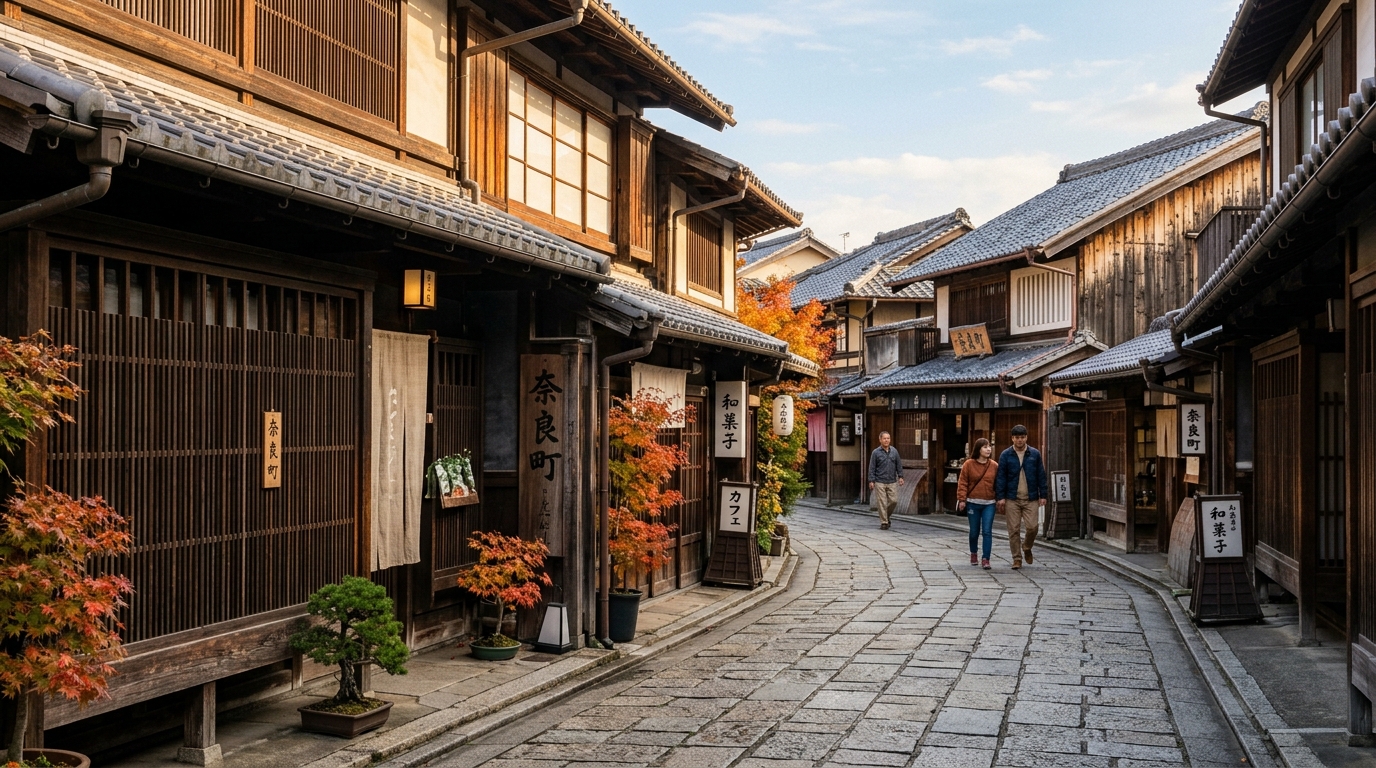
1. Looking Back at the History and Present State of Nara’s Historic Townscapes on October 23, "Heian Capital Transfer Day"
When people think of ancient capitals in Japan, Kyoto and Nara stand as the two undisputed pillars. However, Nara City's unique charm lies in its tranquility and an overwhelming accumulation of history. The Naramachi area, which retains city grids dating back to the Heijo-kyo era alongside traditional machiya townhouses built from the Edo through the Meiji and Taisho periods, offers a special atmosphere where history can be felt with every step.
In recent years, major redevelopment projects and infrastructure improvements have been progressing around Nara City, dramatically enhancing living convenience. For instance, developments around JR Nara Station—such as the "JR Nara Station South Special Land Readjustment Project"—and the south exit station plaza redevelopment at Kintetsu Yamato-Saidaiji Station (大和西大寺駅) have dramatically improved pedestrian flow and access to commercial facilities. Strengthening Nara's role as a transportation hub has made commuting to work and school in Osaka and Kyoto even smoother.
Furthermore, the concentration of data centers has accelerated rapidly in Nara City and adjacent southern Kyoto Prefecture (around Keihanna Science City / けいはんな学研都市). Driven by the expansion of the Kansai region's data center market, expected to reach 500 MW in 2026, there is a noticeable influx of high-income professionals such as IT engineers and researchers.
Tourism and accommodation infrastructure are also booming, with luxury hotels such as JW Marriott Hotel Nara and Fufu Nara opening one after another, alongside the planned opening of "Hoshinoya Nara Prison" in spring 2026 (a renovation of the former Nara Juvenile Prison). These high-profile developments targeted at affluent travelers serve not only to boost Nara's appeal as a tourist destination, but also act as a powerful engine elevating Nara City's brand value as a destination for wealthy relocators from Japan and abroad.
2. Landscape Regulations and Residential Advantages in Nara City's "Naramachi" Preservation Districts
To maintain its historical townscapes, Nara City enforces strict landscape ordinances and building codes. In scenic zones and historic preservation districts—especially around Naramachi—detailed regulations govern building height, exterior wall colors, and roof styles (such as mandatory Japanese clay roof tiles).
From a real estate investment or home construction standpoint, these regulations are often perceived as drawbacks, potentially increasing construction costs and restricting design freedom. However, from the perspective of owner-occupier buyers and relocating residents, these strict rules flip into a massive advantage: a guarantee that beautiful townscapes and quiet residential environments will be protected for generations to come.
Looking at urban planning data for central Nara, the area surrounding Kintetsu Shin-Omiya Station (新大宮駅) is designated as a "Commercial District," allowing high-density development with a building coverage ratio of 80% and a floor area ratio (FAR) of 400%. It is vibrant and offers urban convenience. However, just a short distance away lies quiet residential neighborhoods such as the Aoyama (青山) area, designated as a "Category I Exclusively Low-Rise Residential Zone" requiring spacious lot planning with a coverage ratio of 40% and a FAR of 60%.
This harmonious gradation—combining convenient station areas with concentrated commercial functions alongside quiet residential neighborhoods where sunlight and scenery are strictly protected—is a major draw of Nara City's living environment. Preventing the chaotic spread of high-rise apartments leaves open skies, making it an ideal residential base for families seeking a peaceful life and individuals wanting a retreat from urban bustle.
3. Growing Demand for Traditional House/Townhouse (Kominka & Machiya) Renovations and Its Impact on Asset Value
Within this favorable environment, demand has been surging for renovated kominka (traditional wooden houses) and machiya (traditional townhouses). Wooden structures over 50 or 100 years old were once avoided as "old, cold, and expensive to maintain." Today, however, features that cannot be replicated in modern new construction—such as massive timber pillars and beams, earthen walls, and charming inner courtyards (tsuboniwa)—are being re-evaluated as premium assets.
In terms of relocation trends among high-net-worth individuals, beyond new upscale residential areas in western Nara like Gakuen-mae (学園前), Tomigaoka (登美ヶ丘), and Ayameike (あやめ池), a growing number of buyers are purposefully acquiring traditional machiya in the historic center and fully modernizing their interiors.
If you wish to explore your area of interest in greater detail, registering for a free account on our site enables you to pull Ministry of Land, Infrastructure, Transport and Tourism (MLIT) data used in this article directly via your Claude or ChatGPT (via MCP integration). Continuing your research with your own AI assistant will help streamline your property search and neighborhood analysis.
The asset value curve of renovated traditional houses differs significantly from that of newly built speculative houses. Standard Japanese wooden houses are often considered to have almost zero structure value after 20 years. However, renovated machiya with historical character—when properly retrofitted for structural strength and equipped with modern amenities—acquire vintage value, making them resistant to price depreciation (or even prone to price appreciation). Within landscape preservation districts, the risk of neighborhood deterioration is low, making this a highly logical choice for long-term asset preservation.
4. Why Owner-Occupier Families and Singles Choose Traditional Renovations: Blending Historic Charm with Modern Comfort
When hearing "traditional house," many worry about day-to-day practicalities: "Isn't it cold in winter and hot in summer?" or "Aren't the kitchen and bathroom outdated?" Thanks to advances in modern renovation technology, these concerns can be completely eliminated.
While preserving historical features like exterior aesthetics and primary timber posts and beams, contractors can install high-performance insulation in floors, walls, and attics, along with interior secondary windows (uchi-mado) that preserve architectural aesthetics. Upgrading kitchens, bathrooms, and toilets with modern fixtures creates a comfortable home with streamlined domestic workflows.
Furthermore, generous government subsidy programs provide strong support for traditional house restoration. Nara City offers local programs such as the "Nara City Historic Building Preservation and Improvement Subsidy" (奈良市歴史的風致形成建造物保存整備事業補助金), which may help cover exterior restoration costs (note: details, eligibility, and annual budgets should be confirmed on the official municipal website). Combining this with national energy-efficiency grants—such as the "Advanced Window Renovation Project" (先進的窓リノベ事業) and the "Child-rearing Eco-Home Support Project" (子育てエコホーム支援事業)—can significantly reduce overall renovation costs.
From spacious earthen entryway spaces (doma) repurposed into hobby rooms or home offices to living rooms opening onto serene inner gardens, these versatile layouts accommodate diverse lifestyles for single professionals and growing families alike, driving strong demand among practical home buyers.
5. Transaction Price Trends and Future Outlook for Used Homes and Machiya in Central Nara City
Let's examine actual real estate transaction data in Nara City to objectively analyze market trends. According to transaction data retrieved by our platform's backend system (period: 2021–2026, municipality code: 29201 Nara City), there were 6,957 transactions recorded during this timeframe. The overall average transaction price was approximately ¥26.64 million, the median was ¥20.00 million, and the average unit price was approximately ¥98,000/sqm. Transaction amounts ranged widely from ¥1,000 to approximately ¥1.8 billion, demonstrating a diverse property market.
Furthermore, based on our quarterly aggregation of MLIT real estate transaction data for the latest market quarter—Q1 2026 (2026Q1)—the breakdown by property type is summarized below:
| Property Type | Q1 2026 Transaction Count | Median Price per Sqm | Median Transaction Price | YoY Change (Price/Sqm) |
|---|---|---|---|---|
| Pre-owned Condominiums, etc. | 124 | ¥242,000/㎡ | ¥16.00 million | -14.0% (-0.14) |
| Residential Land (Land Only) | 18 | ¥75,000/㎡ | ¥18.00 million | -14.8% (-0.148) |
| Residential Land (Land & Building) | 133 | ¥144,000/㎡ | ¥29.00 million | +29.3% (+0.293) |
A striking takeaway emerges from this data: while unit prices for pre-owned condos and vacant land trended downward compared to the same period last year, "Residential Land (Land & Building)"—representing existing single-family homes—recorded a sharp Year-over-Year increase of +29.3% in price per square meter, reaching a median transaction price of ¥29.00 million. This provides compelling evidence that buyer activity among owner-occupiers purchasing high-quality existing houses, kominka, or machiya to renovate and inhabit is accelerating, leading the market to place a strong premium on existing structures.
The chart below visualizes the quarterly trend in median price per square meter for "Residential Land (Land & Building)":
After hovering flat around the ¥110,000/sqm level from Q2 2024 through late 2025, prices sharply surged from Q4 2025 into Q1 2026.
Looking at top districts by transaction volume (pre-owned condos, etc.), high activity was recorded in Omiya-cho (大宮町, 44 transactions, ¥262,000/sqm), Naka-Tomigaoka (中登美ヶ丘, 40 transactions, ¥463,000/sqm), Ayameike-Minami (あやめ池南, 30 transactions, ¥233,000/sqm), Tomio-Kita (富雄北, 25 transactions, ¥187,000/sqm), and Sanjo-Honmachi (三条本町, 21 transactions, ¥356,000/sqm)—showing strong demand concentrated around major JR and Kintetsu stations as well as affluent western suburban areas.
Individual transaction samples from Q1 2026 reveal that in the Aoyama district (Category I Exclusively Low-Rise Residential Zone), a 5LDK house built in 1986 (255 sqm) sold for ¥20.00 million, while a 4LDK+S built in 1992 (215 sqm) sold for ¥16.00 million. In Akishino-cho (秋篠町), a 4LDK house built in 2010 (135 sqm) transacted at ¥26.00 million, highlighting active trading for family homes with generous lot sizes. Meanwhile, in the condominium market, a 4LDK unit built in 1973 (90 sqm) in Akishino-Sazanka-cho (秋篠早月町) sold for ¥10.00 million, illustrating a market where buyers can acquire older properties at reasonable prices to customize through renovation.
6. Renovation Costs and Structural Considerations for Traditional Architecture
When considering the purchase of a kominka or machiya, the most critical factor to watch for is "hidden renovation costs." Buildings constructed with traditional timber framing differ structurally from modern conventional wooden construction, making seismic evaluations by qualified specialists essential.
In particular, if termite damage to posts or sills, water leaks affecting roof framing, or foundation settlement are uncovered, repairs go far beyond surface interior remodeling. Correcting these issues may require major structural work—such as jack-up foundation repouring or structural timber replacement—adding unexpected costs ranging from several million to over ten million yen. Rather than jumping at a low purchase price, establishing a realistic budget that encompasses the total scope of renovation is vital.
To help plan budgets and visual concepts before embarking on home renovations or construction, our platform offers an "AI Architecture Simulator" (Pro Plan exclusive). By inputting local transaction data and your personal design preferences, the AI rapidly generates 2D floor plans, 3D structural models, solar radiation simulations for summer and winter solstices, exterior visual renders, and estimated total budgets. Users can even upload existing 2D floor plans to convert them into 3D visualizations, enabling clear evaluation of renovation options and confidence in home planning.
7. Neighborhood Environment, Safety, and Hazard Check Impacting Livability
In addition to property features, surrounding neighborhood infrastructure plays a decisive role in daily livability. The closest station for our focal survey point, Kintetsu Shin-Omiya Station, sees heavy daily traffic of 29,322 passenger movements, creating a lively urban setting. Around the station are 34 medical facilities, including Yoshimoto Clinic (医療法人 吉本医院), Iwai Orthopedics (医療法人社団岩井整形外科), and Iwai Internal Medicine Clinic (岩井内科クリニック), providing strong peace of mind for health management. For families, the area falls within the school districts of Sahogawa Elementary School (佐保川小学校) and Mikasa Junior High School (三笠中学校), offering well-established educational environments.
However, one element that must never be overlooked in real estate acquisition is hazard mapping. Based on location data for this area, sediment-related disaster risk was assessed as low/none. However, flood risk was flagged as "Present," with a maximum inundation depth rank of "4," representing a severe potential water depth of 5 to 10 meters.
Flat, historical neighborhoods were historically centered along river networks or water transit routes, meaning they frequently carry flood vulnerability. Buyers in this area must implement concrete flood defense measures, such as raising building foundations, installing critical utilities (electrical panels, HVAC outdoor units) on upper floors, and verifying local evacuation routes in advance.
8. Conclusion: Ideal Living and Asset Protection Amid Nara's Historic Scenery
On this anniversary of "Heian Capital Transfer Day," we have explored the real estate dynamics of Nara City's historic landscape preservation districts. While strict landscape ordinances may initially seem restrictive, they ultimately serve as a powerful guarantee that protects beautiful streetscapes and peaceful residential living for the future. With tailwinds from data center expansion, luxury hotel openings, and station-front redevelopments, Nara City's brand equity continues to rise.
As reflected in transaction data, strong buyer demand has driven a +29.3% YoY surge in price per square meter for pre-owned single-family homes and townhouses. When combined with proper seismic reinforcement, thermal insulation upgrades, and flood hazard mitigation, renovating a traditional home offers an asset-rich lifestyle that seamlessly unites historic elegance with modern comfort.
To conduct deeper location analysis for your property search or renovation plans, explore our site's free membership registration and the AI Architecture Simulator (Pro Plan).