
As Culture Day (文化の日, Bunka no Hi) approaches, attention naturally turns once again to Japan's traditional beauty and historic heritage. Matsue City, Shimane Prefecture (島根県松江市, Shimane-ken Matsue-shi)—home to National Treasure Matsue Castle (国宝・松江城, Kokuhō Matsue-jō)—is widely celebrated as the "City of Water," where scenic vistas along Lake Shinji (宍道湖, Shinji-ko) harmonize with a traditional castle town. In recent years, alongside landscape preservation initiatives, major station-area redevelopment and new cultural infrastructure projects have gained momentum, further elevating the quality of the city's living environment.
In this article, a real estate analyst offers an in-depth examination of the latest housing market conditions and living standards in Matsue City. Drawing on transaction records, hazard metrics, and urban environmental data compiled by Mekiki Research (物件目利きリサーチ, Bukken Mekiki Research), we analyze livability for both families and single-person households, alongside the city's long-term asset value potential.
Whether you are looking to purchase a primary residence or invest in local real estate, this guide breaks down land price trends and key architectural planning considerations in a clear, actionable format. Let's explore the evolving real estate landscape of Matsue City—where rich heritage intersects with modern urban convenience—through real market data.
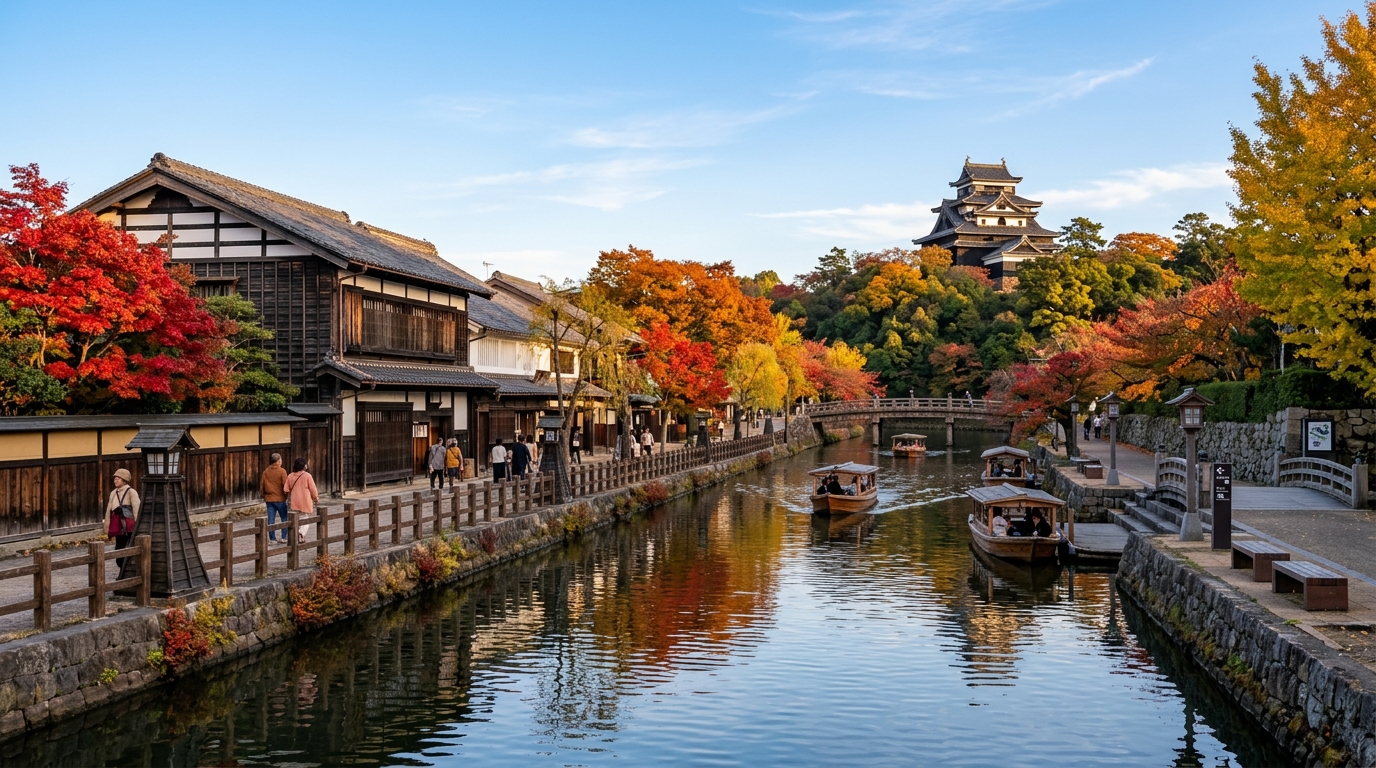
1. [2026 Update] Reassessing Matsue's Appeal on Culture Day: The Tangible Value of National Treasure Matsue Castle and Historic Streetscapes
Matsue City developed around Matsue Castle, one of only twelve remaining original castle keeps in Japan. Its historic streetscapes and scenic waterfronts along Lake Shinji are deeply integrated into daily life, giving rise to exceptional cultural value. On Culture Day, reassessing the intangible asset value created by these historic vistas offers meaningful context for property buyers and investors alike.
In real estate markets, neighborhoods with well-preserved natural and historic surroundings tend to maintain high living standards over the long term, making property values far more resilient to steep depreciation. Officially designated as an "International Cultural Tourism City," Matsue enforces municipal landscape ordinances and architectural guidelines that limit haphazard urban sprawl. This proactive governance has created clean, quiet, and orderly residential neighborhoods.
For homebuyers, attractive streetscapes and a tranquil living environment translate directly into elevated daily comfort. For real estate investors, an irreplaceable regional brand acts as a strong competitive moat—supporting stable tenant demand and long-term asset differentiation. Breathing history and culture, Matsue stands out not merely as a regional city, but as a distinct residential market with a unique identity.
2. Living in Landscape Protection Zones: High Environmental Quality, Crime Prevention, and Disaster Preparedness
Matsue's landscape conservation districts and city center offer key advantages not only in visual appeal but also in residential safety. Strong community ties and active local oversight create a safe, watchful environment that appeals strongly to families with children.
At the same time, given its geographic setting as a water city, examining natural hazard risks is crucial. According to location data compiled by Mekiki Research for central Matsue (near latitude 35.4722, longitude 133.0505), the area carries flood and sediment hazard risks. Specifically, the maximum projected flood inundation level falls into Category 3 (3.0 to 5.0 meters), and debris flow risks are noted for sediment hazards.
While scenic lakefront views are highly desirable, managing environmental risks with accurate data is essential when selecting a home or investment property. Property owners can adopt concrete countermeasures—such as raising building foundations, positioning primary living space on the second floor or higher, and establishing clear evacuation plans. Rather than ruling out an area simply because hazards are flagged, data-driven risk management allows residents to enjoy waterfront living while ensuring safety and peace of mind.
3. Urban Upgrades Toward 2030: Matsue Station Redevelopment, Cultural Hubs, and Emerging Tech Clusters
In addition to its historic charm, Matsue City is rapidly modernizing its urban infrastructure. Grounded in the "Matsue Station Area Design Vision" targeting 2030, large-scale revitalization around Matsue Station is actively moving forward. Project plans include reconfiguring public spaces near the former Ichibata Department Store (一畑百貨店, Ichibata Hyakkaten) site and Matsue Terrsa (松江テルサ, Matsue Terusa), as well as expanding bus terminals to strengthen transit connectivity and pedestrian mobility.
Cultural venues are also seeing major upgrades. In October 2024, Karakoro Art Studio (カラコロ工房, Karakoro Kōbō)—a repurposed historic building formerly housing the Bank of Japan's Matsue Branch—reopened following a major renovation, drawing over 380,000 visitors annually as a vibrant community center. Furthermore, the Plava Hall (プラバホール, Puraba Hōru / Matsue City Cultural Center) completed a full renovation in April 2024, serving as a core hub for local arts and civic events.
Employment dynamics are equally positive. Shimane Prefecture has been aggressively attracting technology businesses, creating a growing cluster of data centers and IT firms in Matsue. The convergence of urban redevelopment and high-tech sector growth is encouraging an influx of young professionals and skilled workers, generating healthy demand for both quality rental housing and homeownership. Blending historic streetscapes with modern infrastructure, Matsue offers a model for regional urban development in Japan.
4. Residential Amenities, Healthcare, and Family Support in Central Matsue
Matsue City provides a balanced residential environment suited to diverse households. Environmental metrics from Mekiki Research confirm that central survey points fall within a "Commercial Zone" (商業地域, shōgyō chīki) with an 80.0% building coverage ratio (BCR) and a 400.0% floor area ratio (FAR), allowing for convenient, high-density land use. Healthcare access is robust, with 16 nearby medical facilities—including Fukuda Internal Medicine Clinic (医療法人福田内科医院, Fukuda Naika Iin), Shibata Neurosurgery (柴田脳神経外科, Shibata Nōshinkei Geka), and Hata Clinic (幡医院, Hata Iin)—ensuring accessible routine care and specialized treatment.
Note that in the underlying public transaction dataset, specific fields such as school districts (elementary and junior high) and nearby station passenger counts appear as "null" (no data). Because open datasets can occasionally omit micro-level details, conducting on-site checks for school boundaries and local transit options (including municipal bus lines) remains an important step during property evaluation.
Generous local subsidies further support homebuyers and families. Matsue City offers the "Childcare Household Settlement Housing Acquisition Subsidy" (子育て世帯定住団地取得支援補助金), providing up to 1.0 million yen for households relocating within the city and 1.5 million yen for UIJ-turn relocators moving from major metropolitan areas. Additionally, homeowners can leverage Shimane Prefecture's "Shimane Longevity & Childcare Safe Home Renovation Grant" (しまね長寿・子育て安心住宅リフォーム助成事業) to secure funding for child-friendly upgrades, barrier-free retrofits, and seismic reinforcement.
Recent market transactions reflect a active family housing market. In the Kaminogi (上乃木) district, a newly constructed single-family home (built in 2025, 210 m² floor area, wooden construction, Category II Residential Zone, BCR 60% / FAR 200%) traded for approximately 43 million yen. In the same neighborhood, a 4LDK pre-owned condominium built in 2020 (85 m², reinforced concrete) transacted at around 30 million yen, demonstrating a healthy selection of modern housing options tailored to different budgets and lifestyles.
5. [Q1 2026 Market Analysis] Land Price Trends and Property Value Stability in Matsue City
To understand local market dynamics, let's examine concrete transaction records. Across 2,988 sales recorded by Mekiki Research in Matsue City from 2021 through 2026, the average transaction price stood at approximately 16.44 million yen, with a median of 9.80 million yen. The average land unit price was roughly 43,000 yen/m². While high-value commercial transactions (up to 1.2 billion yen) skew the overall average upward, real-demand residential purchases consistently center around the 10-million-yen baseline.
For real estate investors, multi-family income assets present compelling opportunities. For example, a multi-family apartment building in Kaminogi constructed in 2004 (1,800 m² building area, light-gauge steel frame, Category I Residential Zone) transacted at approximately 180 million yen. Driven by ongoing urban upgrades and tech-sector employment growth, well-located rental residential properties offer strong potential for stable, long-term yield generation.
According to our quarterly aggregation of transaction data from the Ministry of Land, Infrastructure, Transport and Tourism (MLIT) "Real Estate Information Library" for Q1 2026, price movements by asset class show the following trends:
- Pre-Owned Condominiums: Median price per square meter reached approximately 300,000 yen/m² (median overall price ~23 million yen), representing a strong year-over-year increase of +25.0%.
- Residential Land (Land Only): Median price per square meter reached approximately 42,000 yen/m² (median overall price 7 million yen), marking a sharp gain of +75.0% YoY.
- Residential Land (Land & Building): Median price per square meter stood at approximately 39,000 yen/m² (median overall price 14 million yen), reflecting a temporary price adjustment of -37.4% YoY.
In recent periods, transaction activity has concentrated in several prominent submarkets, as detailed below:
| District Name | Property Type | Sales Count | Median Price / m² |
|---|---|---|---|
| Higashi-Inube-cho (東忌部町) | Forest land | 14 | Approx. 487 yen/m² |
| Kaminogi (上乃木) | Residential Land (Land & Building) | 13 | Approx. 75,000 yen/m² |
| Higashi-Izumo-cho Iya (東出雲町揖屋) | Residential Land (Land & Building) | 13 | Approx. 63,000 yen/m² |
| Hokki-cho (法吉町) | Residential Land (Land Only) | 12 | Approx. 8,000 yen/m² |
| Higashi-Izumo-cho Iya (東出雲町揖屋) | Residential Land (Land Only) | 11 | Approx. 48,000 yen/m² |
Suburbs such as Kaminogi and Higashi-Izumo-cho Iya continue to lead market volume, reflecting stable underlying demand from both owner-occupiers and investors.
6. Key Planning Considerations and Building Restrictions in Historic Conservation Areas
When planning a new home build or purchasing real estate in Matsue's historic districts, several regulations require careful consideration. First, properties within designated landscape zones are subject to building restrictions under municipal ordinances and the City Planning Act. Local guidelines frequently govern building height, exterior paint colors, roof slopes, and exterior materials. Reviewing Matsue City’s landscape regulations during the early design phase is crucial to ensure architectural plans align with local historical aesthetics.
Second, buyers should plan physical safeguards when developing in hazard-prone areas. In zones with projected flood depths of 3 to 5 meters (Category 3) or potential debris flows, engineering measures—such as ground stabilization, reinforced raised foundations, and elevated mechanical systems—should be built into architectural plans.
Third, buyers in semi-rural outskirts must account for mixed land-use characteristics. For instance, in the Aika-cho (秋鹿町) area, a 940 m² agricultural plot transacted for approximately 2 million yen. In areas where residential lots and agricultural plots adjoin, conducting comprehensive site surveys—including verifying utility connections and access rights—is vital before purchasing.
7. Designing a Home in Harmony with Lake Shinji: Effective Home Planning Steps
Building a home in Matsue is most rewarding when architectural design captures the surrounding natural environment. Thoughtful layout planning—such as orienting living area windows toward Lake Shinji’s famous sunsets or arranging rooms to maximize seasonal breezes—allows homeowners to enjoy comfortable, energy-efficient living.
To streamline home planning, subscribers to our site's Pro Plan can utilize our interactive "AI Architecture Simulator." This tool allows users to quickly generate customized 2D floor plans and 3D building models using actual Matsue property data and specific design inputs.
In areas governed by strict landscape codes or tight property boundaries, the simulator's summer and winter solstice sunlight modeling tool is especially valuable. By uploading existing floor plan sketches, users can render full 3D visual models and generate preliminary cost estimates—providing a clear foundation for discussions with architects and builders. Completed designs can be exported to PowerPoint (.pptx) or 3D (.glb) formats and shared seamlessly with family members via direct web links.
8. Summary: Achieving Quality Living and Long-Term Value in Historic Matsue City
Matsue City, Shimane Prefecture, stands out as a vibrant regional hub where heritage and forward-looking growth coexist. With National Treasure Matsue Castle at its heart, major station-front redevelopments underway, renovated cultural venues, and expanding tech clusters, the city offers rich potential for families, relocators, and property investors alike.
Market data confirms solid fundamentals, marked by rising condo values and steady land sales. At the same time, navigating hazard disclosures and local building regulations is essential for long-term satisfaction. Achieving your ideal lifestyle and securing property value requires objective data analysis and proactive risk management.
To analyze detailed market values, hazard disclosures, and neighborhood amenities for a specific property in Matsue, explore our free Area Research tool. Creating a free account enables you to connect the MLIT datasets used in this article directly to your own AI assistant (via MCP integration with Claude or ChatGPT). Try running your real estate research through your favorite AI tool today!