
Today is November 3, 2026, Culture Day (Bunka no Hi / 文化の日). In Morioka City, Iwate Prefecture (岩手県盛岡市)—a city that has long flourished as a castle town where rich natural scenery and historical architecture coexist in harmony—the preservation of historic streetscapes and the redevelopment of new cultural hubs are progressing in parallel. From a real estate perspective, historic landscape preservation and cultural facility upgrades are far more than mere tourism initiatives; they serve as powerful catalysts that elevate living comfort and provide steady support for local land values. In short, central Morioka holds exceptional asset value potential for both investors and home-seeking buyers, boosted by the ripple effects of urban redevelopment projects slated for 2028 through 2030.
In this article, we examine the residential environment and future land price trends around Morioka Castle Site Park (Morioka Jōato Kōen / 盛岡城跡公園), the Nakatsu River (中津川 / Nakatsugawa), and the Konyacho (紺屋町) area from the perspective of a professional real estate analyst, utilizing the latest real transaction data from the Ministry of Land, Infrastructure, Transport and Tourism (MLIT), hazard risk maps, and ongoing urban planning projects.
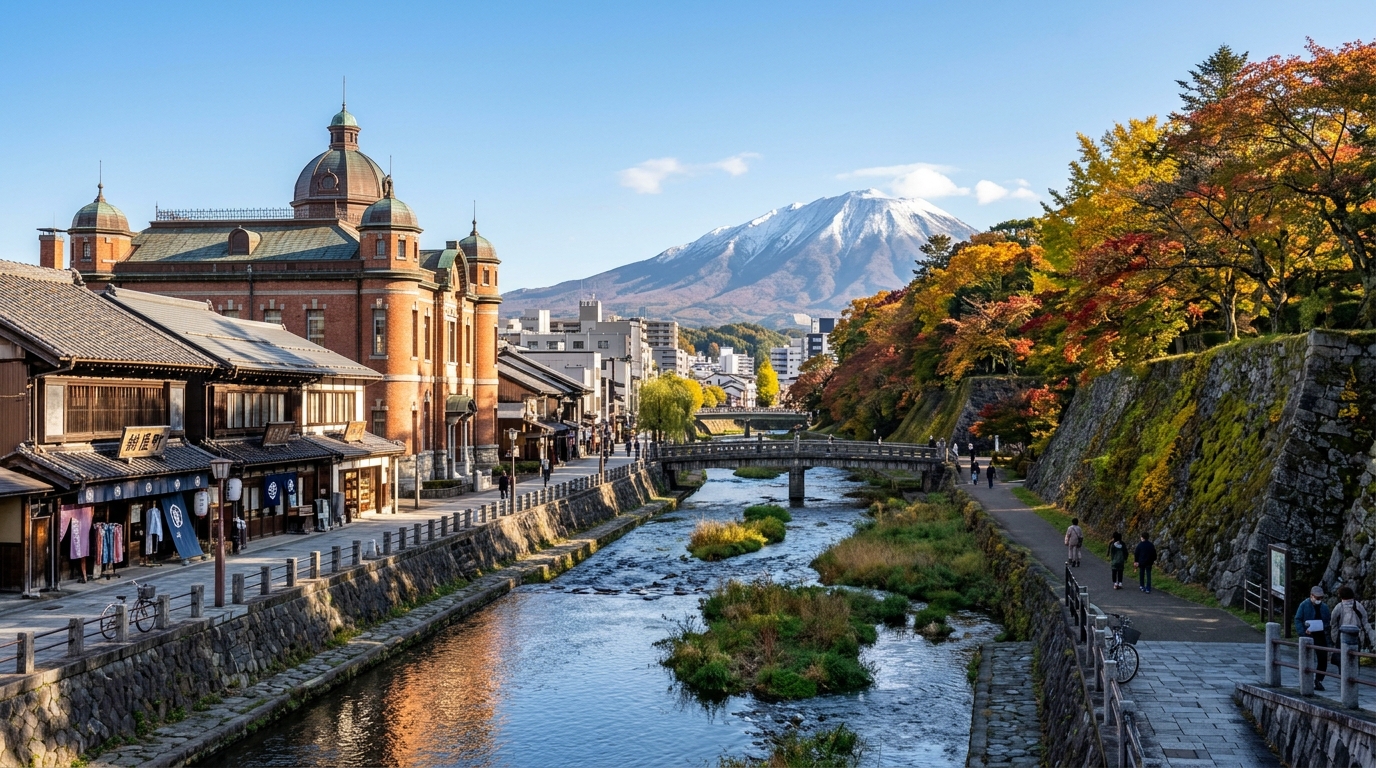
1. Reflecting on Morioka's Appeal on Culture Day: The Deep Connection Between Historic Streetscape Preservation and Living Environment
A property's asset value is shaped by more than just train station proximity and daily convenience. In recent years, major Japanese cities have increasingly focused on city brand power and walkable public spaces. Morioka features a unique urban character unmatched by other regional hubs, thanks to its vibrant waterfronts along the Nakatsu and Kitakami Rivers, lush greenery anchored by Morioka Castle Site Park, and historic structures scattered throughout the downtown core.
While historic preservation districts enforce strict building codes, they prevent haphazard development and guarantee long-term residential quality. For families buying a primary residence and singles seeking a tranquil living environment, residing in a neighborhood rich in history offers irreplaceable value. Looking across Morioka on Culture Day underscores how this intangible asset—its history—serves as a solid baseline supporting nearby real estate values.
2. The Strengths of "Walkable" Historic Preservation Districts: Lessons from the Morioka Castle Ruins & Konyacho Area
Morioka City is currently executing its "Downtown Walkable Promotion Project" covering fiscal years 2025 through 2029 (Reiwa 7–11). This public-private partnership aims to boost foot traffic and create an engaging, walkable downtown connecting two major transit hubs: Morioka Station and the Morioka Bus Center. The riverside corridor along the Nakatsu River and the historic Konyacho neighborhood sit right at the heart of this pedestrian network.
In real estate investment theory, pedestrian-centric street designs lengthen visitor dwell times, which boosts commercial demand for ground-floor storefronts. Rising tenant demand drives up rental rates, ultimately improving property yields and land values. Furthermore, historic public landmarks like the Iwate Prefectural Assembly Hall (Iwate-ken Kōkaidō / 岩手県公会堂)—completed in 1927 in the Uchimaru (内丸) district—are undergoing preservation and adaptive reuse ahead of their centennial celebrations. Such historic protection zones represent defensive investment opportunities that preserve asset value over the long term.
3. How Redeveloping Cultural Facilities and Public Spaces Enhances Urban Vitality and Living Comfort
Central Morioka is also undergoing active redevelopment of its cultural and public facilities. Cultural institutions such as the Morioka History and Culture Museum (Morioka Rekishi Bunka-kan / もりおか歴史文化館) cluster around Morioka Castle Site Park, providing residents with lifelong learning opportunities and public spaces for relaxation. Discussions regarding broader urban modernizations are also steadily moving forward, including the 2025 Morioka Station West Exit Complex Facility Master Concept (Draft) and the municipal government's new city hall construction plans.
Data covering central Morioka (including Uchimaru and Konyacho) shows that the area is designated as a Commercial Zone under local zoning regulations, permitting high-density development with a building coverage ratio of 80% and a floor area ratio (FAR) of 400%. High-FAR commercial zones often become congested and noisy, but Morioka balances dense urban convenience with living comfort (amenity) by strategically integrating open green spaces, river corridors, and cultural institutions.
4. Latest Land Price Trends and Future Asset Value Potential in Central Morioka
How are these factors influencing the real market? We analyzed real estate transaction data for Morioka City extracted quarterly from MLIT's Real Estate Information Library. Across 4,117 transaction records collected between 2021 and 2026, the overall average transaction price stood at approximately ¥22.16 million (median: ¥15.00 million), with an average unit price of roughly ¥60,000/㎡.
A key highlight is the sustained strength of pre-owned condominiums in the city center. In Q1 2026, 44 pre-owned condominium transactions were recorded, yielding a median unit price of approximately ¥270,000/㎡ and a median transaction price of ¥20.00 million—a +4.8% increase year-over-year. These figures highlight strong underlying demand for high-convenience downtown condos driven by urban return trends.
Conversely, single-family residential markets show a slightly different dynamic. The graph below illustrates the quarterly median price per square meter for residential land and building packages across Morioka City.
In Q1 2026, 65 residential property (land and building) transactions were completed, with a median price per square meter of approximately ¥72,000/㎡ (-21.4% year-over-year) and a median total price of ¥20.00 million. While this appears to show a price correction, the decline is largely driven by larger suburban lots and older housing stock dragging down the overall citywide median.
A sampling of individual transactions from Q1 2026 illustrates market diversity across location and property condition:
| Property Type | Transaction Price | Land Area | Unit Price (¥/㎡) | Year Built | Location |
|---|---|---|---|---|---|
| Land Only | ¥22.0 million | 650 ㎡ | ¥34,000/㎡ | - | Aoyama |
| Land & Building | ¥28.0 million | 210 ㎡ | - | 2018 | Aoyama |
| Pre-owned Condo | ¥3.9 million | 60 ㎡ | - | 1973 | Atago-cho |
| Land Only | ¥17.0 million | 360 ㎡ | ¥48,000/㎡ | - | Atago-cho |
| Land & Building | ¥54.0 million | 710 ㎡ | - | 1986 | Ueda |
As shown above, transaction values vary considerably depending on location, building age, and land use. Overall, properties closer to the central city center show superior asset value retention.
5. Livability and Daily Convenience in Central Morioka for Families and Singles
Beyond investment figures, central Morioka offers compelling practical advantages for primary home buyers. Public school district data indicates that the target area is served by Nio Elementary School (仁王小学校) and Shimokoji Junior High School (下小路中学校)—both highly regarded educational institutions with long-standing traditions. School quality remains a top decision factor for home-buying families.
Healthcare infrastructure is equally robust. The target neighborhood features 43 medical facilities, headlined by major providers such as Iwate Medical University Uchimaru Medical Center (岩手医科大学附属内丸メディカルセンター), Honcho Ishibe Eye Clinic, and Otesaki Internal Medicine & Cardiology Clinic. This concentration of medical care brings peace of mind to singles, young families, and seniors alike.
Financial incentives also support homebuyers and renovations. In addition to the national Child-Rearing Green Housing Support Project launched in 2025, Morioka City offers local subsidies for energy-efficient residential retrofits in FY2026 (Reiwa 8). Taking full advantage of these subsidies allows buyers to lower initial capital outlays while acquiring high-quality living space.
6. Essential Considerations When Buying a Home in Historic Preservation Zones
Despite central Morioka's strong appeal, prospective buyers must carefully evaluate natural hazard risks. While scenic rivers like the Nakatsu and Kitakami add natural beauty, they also present potential flood hazards.
Government hazard data for the target downtown area indicates zero risk of sediment disasters. However, flood hazards are explicitly marked, with maximum expected flood depths reaching Level 4 (5 to 10 meters) under major flood scenarios.
Buyers considering single-family homes or low-rise condominiums in this zone should thoroughly review local hazard maps. Architectural adaptations—such as locating utility/electrical equipment on upper floors, utilizing reinforced concrete elevated structures, or opting for piloti ground-floor garages—are essential design considerations.
To easily assess environmental risks prior to property viewings, our platform's free membership feature provides comprehensive location insights. By registering as a free member, users can specify addresses to review price histories, detailed hazard data, and neighborhood amenities directly on an interactive map. We recommend screening risk factors early in your search to ensure a safe, well-informed property purchase.
7. Medium-to-Long-Term Residential Value Outlook Driven by Redevelopment and Cultural Hub Synergies
Looking toward 2028 through 2030, central Morioka's real estate value outlook remains bright. Near the Morioka Bus Center, the Nakanohashi-dori 1-chome District Urban Redevelopment Project (中ノ橋通一丁目地区第一種市街地再開発事業) is underway, targeting completion in FY2027 (Reiwa 9) to deliver a mixed-use complex combining retail, commercial offices, residential units, and parking infrastructure. Once operational in 2028, this project will boost local pedestrian circulation and increase both day and night populations.
Transaction data shows heavy condominium activity in central districts such as Honcho-dori (本町通: 21 pre-owned condo transactions, median unit price ~¥180,000/㎡), Chuo-dori (中央通: 14 transactions, ~¥260,000/㎡), and Kaiunbashi-dori (開運橋通: 13 transactions, ~¥170,000/㎡).
Suburban hubs also remain active, led by land sales in Mukainakano (向中野: 17 transactions, ¥85,000/㎡) and single-family home transactions in Sanbonyanagi (三本柳: 16 transactions, ~¥140,000/㎡). However, as Japan's population ages toward 2030, municipal compact city initiatives designed to concentrate urban functions within central districts will ensure that real estate directly benefiting from central redevelopment maintains the strongest long-term value resilience.
8. Summary: Finding Your Ideal Home in Morioka Where History and Culture Harmonize
Central Morioka stands out as a unique regional center where historic streetscape preservation, modern cultural hub enhancements, and forward-looking downtown redevelopments meet. As walkable urban spaces expand, the area combines commercial convenience with residential tranquility, offering exceptional real estate potential for both investors and home buyers. At the same time, careful evaluation of flood hazards remains a critical step in the purchase process.
Successful real estate acquisition relies on data-driven analysis and objective risk evaluation. Furthermore, registering for a free membership unlocks Model Context Protocol (MCP) features, enabling you to pull MLIT transaction data directly into your preferred AI tools (such as Claude or ChatGPT). This seamless integration allows you to run custom queries and easily compare neighborhoods across Japan.
Explore the latest real estate market data and hazard risk profiles using the link below to take your first confident step toward homeownership in Morioka: